Word Bliss
- 4.7
- Rating
- 1.00M
- Installs
- Free
- Price
 Analysis by App-foxy
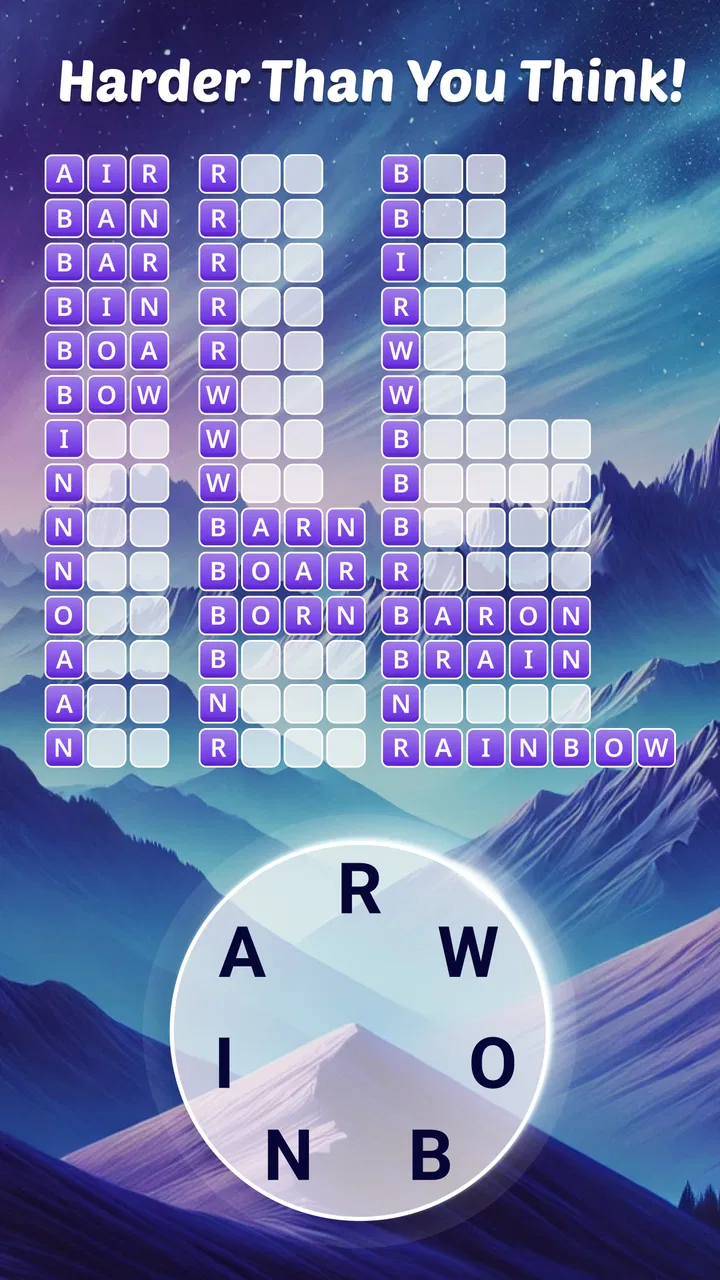
I usually know within a few days whether a word game is going to become a useful little habit or disappear from my phone after the first burst of curiosity. Word Bliss made a good first impression because it keeps the basic idea easy to understand: find words from the letters on screen, clear the available spaces, and continue through a steady set of brain-teasing puzzles. It is a free word game from PlaySimple Games, aimed at Everyone, and its relaxed presentation makes it approachable even if you do not normally play puzzle games.
What interested me more than the opening levels was whether it could remain enjoyable once the novelty wore off. Many word games feel satisfying for a weekend and then become repetitive, overly dependent on hints, or too demanding for casual play. This one has enough structure to support short daily sessions, but it is not equally suitable for every kind of word-game player. My experience is that its lasting value depends on whether you enjoy gradual progression more than competition, speed, or unrestricted vocabulary practice.
From an easy first week to a more deliberate routine
The first week is where the game is at its most welcoming. The rules require almost no learning, so I can open it while waiting for an appointment or during a short break and start solving immediately. The early puzzles are useful for learning how the game expects me to think: I look for obvious short words first, then test less immediate combinations, and finally use the remaining spaces to guide what might be missing.
You May Also Like

 Blood Strike: 2.5 Anniversary
Blood Strike’s Loadouts Turn Every Drop Into a Tactical Gamble
A close look at Blood Strike’s custom loadouts: how fast access to signature weapons reshapes its battle royale rhythm, rewards preparation, and narrows the gap between fights.

 Pandora - Music & Podcasts
Pandora’s Music Is Easy to Start, but Harder to Recover
Pandora’s strength is its low-effort path from a seed to a station. Its weak spot is how much confidence it asks you to place in connection, setup, and quiet recovery.

 8 Ball Pool
 Is Built on Rivalries, Rematches, and Routine
A close look at the rivalries, rematches, shared routines, and unanswered safety questions that turn a quick pool match into a persistent mobile community.

 Samsung Music
’s Quiet Strength Is Playing What You Already Own
Its reach comes less from spectacle than from dependable access to a personal library. That simplicity is both the app’s strongest retention engine and its ceiling.

 AccuWeather: Weather Radar
AccuWeather Review: A Quick, Clear Forecast for Everyday Decisions
For everyday plans, the best forecast is the one you can understand quickly. AccuWeather makes rain timing, radar, and local conditions easy to act on, with a few trade-offs.

 Hill Climb Racing
Why Hill Climb Racing Still Turns Crashes Into One More Run
A tiny car, a bumpy hill and one more upgrade: Hill Climb Racing keeps resurfacing because its simple chaos makes every near-miss feel personal.
More From Our News Desk



That last step is more important than it sounds. Instead of treating every puzzle as a random search through letters, I find it more effective to use the board as a set of clues. If one space remains and the available letters suggest several possibilities, the length and shape of the unfinished answer narrow the search. This makes the game feel more thoughtful than simply tapping every possible combination.
The presentation also helps during those early sessions. The store describes it as a thoughtfully designed word game, and I think that description fits the general experience better than calling it a fast arcade challenge. The pace gives me room to consider an answer rather than pressuring me to react instantly. That makes it suitable for winding down, commuting, or taking a brief mental break when I want something active but not stressful.
One practical advantage is that the game does not demand a large uninterrupted block of time. I can solve a little, put the phone away, and return later without needing to remember a complicated control scheme. That makes it easier to form a routine than games that require a full match or a long round. If your ideal mobile game is something you can play in small pieces, this design works in its favor.
During the first several sessions, I also noticed that the most rewarding moments were not always the difficult answers. Completing a puzzle after spotting a word that had been sitting in front of me was often more satisfying than rushing through an easy board. The game encourages a patient kind of attention, which is a good fit for people who want a gentle mental exercise rather than a test of reflexes.
How I approach a puzzle without wasting hints
My best early habit was to avoid using a hint the moment I felt stuck. I first scan for common endings and beginnings, then check whether a longer word can be built from a shorter word I have already found. After that, I look at the empty spaces again. The board often gives enough information to make the next guess reasonable, and solving it independently feels better than spending help immediately.
This approach also reveals a trade-off. The game is accessible because it does not require expert vocabulary, but some puzzles can still catch me when I am tired or thinking too narrowly. I would not describe every solution as obvious, and that is part of the appeal for me. However, players who dislike being stalled by a word they do not recognize may find the hint system increasingly important.
A useful everyday scenario is a short evening reset. I can play a few puzzles after work without committing to a competitive session or watching a long tutorial. The activity is more engaging than passive scrolling, yet it remains calm enough that I do not feel pushed to keep playing. That balance is one reason the game has a chance to become a repeat habit rather than just a one-time download.
What changes after the opening novelty
Once the basic rhythm becomes familiar, the question changes from “Can I solve this?” to “Do I still enjoy solving another one?” That is where personal preference matters. The core interaction remains deliberately simple, so players looking for dramatic new mechanics may feel that the experience settles into a predictable groove. I appreciate the consistency, but I also understand why someone might want more variety.
The game’s scale suggests that it has found a broad audience: it has passed one million installs, with an average rating of 4.7 from around 58 thousand ratings. Those figures do not guarantee that it will suit every player, but they do match my impression that the format is easy to pick up and broadly appealing. It feels designed for a wide range of casual players rather than a small group of dedicated word-game specialists.
For me, the first-week appeal comes from three things working together: quick access to a puzzle, a low-pressure pace, and enough uncertainty in the answers to keep my attention. None of those qualities is unusual on its own. The useful combination is that I can enjoy the game whether I have five minutes or a longer quiet stretch.
Month-to-month value, repetition, and the cost of keeping it installed
After the first month, a word game needs more than pleasant presentation. It needs to fit naturally into a routine and give me a reason to return without making the routine feel like a chore. Word Bliss works best here as a light daily or occasional exercise. I can use it to wake up my vocabulary, fill a waiting period, or replace a few minutes of aimless phone browsing.
Its long-term strength is not intense progression or social competition. It is the dependable shape of the session. I know what kind of attention it requires, and I can decide quickly whether I have the energy for it. That predictability is valuable when I want a small challenge but do not want to learn a new system every time I open a game.
At the same time, predictable play can become repetitive. If I play for long stretches every day, the central word-finding loop may start to feel more like a routine task than a fresh puzzle experience. I get more value by spacing sessions out. A few puzzles at a time preserve the sense of discovery; marathon sessions make the similarities between boards more noticeable.
Who is likely to keep returning
I would recommend it most strongly to casual word-game fans, people who enjoy anagrams, and players who prefer a calm puzzle over a timed contest. It can also suit someone trying to make phone use slightly more intentional: opening a puzzle gives the hands and mind something specific to do, rather than sending me into an endless feed.
It is less convincing for players who want a dictionary tool, structured language study, or a competitive leaderboard-driven experience. The game may encourage me to notice word patterns, but I would not use it as a substitute for a serious vocabulary course. Likewise, if your favorite part of word games is competing against another person under strict time pressure, this slower format may feel too quiet.
It is also worth thinking about spending. The game is free to download, while in-app purchases range from $0.99 to $39.99 per item. I can begin without paying, which is important for testing whether the basic loop suits me. Still, the presence of optional purchases means I would decide in advance how I want to handle hints or other paid assistance. My own preference is to treat help as an occasional convenience, not something that should become part of every puzzle.
That boundary improves the long-term experience. If I use assistance whenever I hesitate, the satisfaction of solving a board declines and the game can start feeling like a sequence of interruptions. If I reserve it for genuinely stubborn moments, the main activity remains finding the answer myself. This is one of the more important maintenance choices because it affects both enjoyment and spending.
Small habits that make the game last longer
I get better month-to-month value by changing how I play rather than expecting the game to constantly reinvent itself. On one day I may focus on solving efficiently; on another, I may deliberately search for less obvious words before moving on. I also stop after a natural session instead of continuing simply because another puzzle is available. That keeps the game associated with a pleasant break rather than an obligation.
Another useful habit is to treat mistakes as clues. When I enter an answer that does not fit, I do not immediately repeat similar guesses. I reconsider the word length, the letters I have ignored, and whether I am assuming a familiar word must be present. This turns a frustrating pause into a small reasoning exercise and reduces the temptation to use help too quickly.
These habits matter because the game itself is intentionally uncomplicated. Its lasting value comes partly from how I manage the sessions. A player who wants constant novelty should probably look toward a larger word-game collection, while someone who enjoys a stable daily ritual may find the simplicity reassuring.
Where fatigue begins to appear
The main source of fatigue is repetition in the central action. Finding words from a set of letters is satisfying, but it remains the same fundamental task from one session to the next. Even when the answers change, the mental process can feel familiar. I notice this most when I play while distracted or try to clear too many puzzles in one sitting.
There is also a vocabulary-related kind of friction. A solution can feel fair once I see it, yet still be difficult to retrieve when I am tired or when my everyday word choices are narrower. That is not necessarily a flaw; challenge is part of a word game. But it does mean the experience can shift from relaxing to irritating depending on my mood.
The game is not the right choice for someone who wants every answer to be immediately recognizable. Nor would I choose it for a child who needs a carefully structured educational progression simply because the content rating is Everyone. An age rating tells me the game is broadly suitable, not that it teaches vocabulary in a formal or tailored way.
Players who need accessibility options, highly adjustable difficulty, or a completely distraction-free experience should make those considerations before settling into it. I would not assume that a simple word board automatically meets every personal accessibility preference. For me, the uncomplicated controls are comfortable, but comfort varies from one player to another.
How it compares with familiar alternatives
Compared with a daily word puzzle, this game feels less tied to one fixed moment of the day. I can play multiple puzzles when I have time instead of waiting for a single daily challenge. That is convenient, but it also removes some of the ritual and scarcity that make a daily puzzle feel special.
Compared with a crossword, it asks for less general knowledge and gives me a more focused letter-based task. I do not need to work through clues that depend on history, culture, or obscure references in the same way. The trade-off is that crossword solving usually offers more varied clue interpretation, while this game keeps me closer to word construction.
Compared with a competitive word game, it is calmer and easier to pause. I do not have to measure my performance against another player during the moment of solving. That makes it better for relaxed use, but worse for anyone who needs rivalry, speed, or a visible sense of mastery to stay engaged.
Compared with a dedicated vocabulary app, it is more playful and less systematic. I may encounter words I would not have considered, but I am not following a lesson plan or reviewing definitions in a structured way. I see it as a recreational supplement for language awareness, not a replacement for deliberate study.
Technical fit and day-to-day practicality
The game was released on July 1, 2019, and the current version is 1.168.0. It requires Android 8.0 or later, so anyone using an older device should check compatibility before planning around it. Those details are especially relevant for people who keep an older phone as a backup or use a device that no longer receives regular system updates.
Because the game is free, trying it is straightforward. I would spend the first several days checking not only whether I enjoy the puzzles, but also whether the rhythm of optional purchases fits my habits. A game can be entertaining and still not deserve permanent space if I feel nudged to spend whenever I get stuck. The right test is whether I can play comfortably while keeping help occasional and intentional.
For storage and attention, the bigger issue is not the effort of learning the game. It is whether I will actually return to it. I would rather keep one modest puzzle habit that I use regularly than collect several similar games that all compete for the same few minutes. Word Bliss earns its place when I want a quiet word challenge; it does not need to be my only game.
My long-term verdict on keeping Word Bliss installed
After the novelty fades, I still see a clear reason to keep this game available, but that reason is specific. It is a reliable, low-pressure word activity for short sessions, not an endlessly changing puzzle platform. I like that I can begin quickly, think at my own pace, and stop without feeling that I have abandoned a long match.
The lasting value is in the habit, not in constant novelty. If I use it as a small mental reset, it remains pleasant. If I demand new mechanics, deep competition, or a formal learning program, its limitations become obvious. That distinction is important because the game is easy to recommend casually, but the best recommendation depends on what kind of repetition the reader enjoys.
I would suggest trying it to someone who wants a free, approachable word game for waiting rooms, quiet evenings, or brief breaks. I would also tell that person to pace the sessions, save hints for real dead ends, and decide early whether optional purchases belong in their routine. Those choices make a noticeable difference to how satisfying the game remains after the opening week.
I would steer a different player toward a crossword, a daily word challenge, or a competitive word app if they need richer clues, stronger social pressure, or a more varied learning experience. Word Bliss is not trying to be all of those things, and it is better judged on its own quieter terms.
My final view is positive but measured. PlaySimple Games has made a word game that is easy to understand and comfortable to revisit, and its 4.7 average from roughly 58 thousand ratings reflects the broad appeal I felt while using it. It is free to start, rated Everyone, and has attracted more than one million installs, but popularity is not the reason I would keep it. I would keep it because a few carefully chosen puzzles can still give me a satisfying break when I want something more focused than scrolling and less demanding than a full game session.
FAQs for Word Bliss
01What is Word Bliss and how do you play it?
Word Bliss is a relaxing word puzzle game built around finding hidden words from a group of available letters. During a typical level, you swipe or tap letters to form valid words and complete the puzzle objective. The game gradually introduces more challenging combinations, making it suitable for casual sessions as well as players who enjoy testing their vocabulary and concentration.
02Is Word Bliss free to download and play?
Word Bliss can generally be downloaded and played for free, although the experience may include advertisements and optional in-app purchases. Paid choices may offer hints, remove ads, or provide other helpful resources. You can normally progress without spending money, but players who use hints frequently may encounter limits or prompts encouraging them to purchase additional assistance.
03Does Word Bliss work without an internet connection?
Many of Word Bliss’s core word puzzles can be played offline after the game has been installed, which is convenient when traveling or when you have limited mobile data. However, certain features may require an internet connection, including advertisements, purchases, cloud-related functions, updates, or promotional content. Offline availability can also vary between versions and devices.
04Is Word Bliss suitable for children and English learners?
Word Bliss is generally approachable for children, families, and people learning English because its gameplay is simple to understand and encourages spelling practice. Nevertheless, difficulty increases over time, and some solutions may depend on less common vocabulary. Parents should also review the app-store age rating, advertising behavior, and optional purchases before allowing younger players to use the game independently.
05Does Word Bliss contain ads or offer hints and other purchases?
The game may display advertisements, particularly between levels or after completing certain activities. It also commonly provides hint systems or bonus resources for players who become stuck, with some options earned through gameplay and others available through in-app purchases. Before downloading, check the current store listing for pricing, advertising details, and whether an ad-removal option is offered.
Pros
- Relaxing word puzzles suitable for short play sessions
- Simple controls make it easy for beginners to start
- Gradual difficulty provides a steady sense of progression
- Offline play is convenient when no internet is available
- Colorful visuals and gentle effects create a pleasant atmosphere
Cons
- Some levels may feel repetitive after extended play
- Hints can make easier puzzles feel less rewarding
- Progress may depend on watching ads or using limited resources
- The game offers limited variety beyond its core word puzzles
- Small text may be uncomfortable on compact phone screens

Word Bliss
Gallery